What WireWhy does
The course, fault finding, and the device labs, exercises for a class, control circuits, the realistic board, and the drawings, with the demo video.
See it in action
One small board with two mistakes: an RCD that trips when the bathroom light comes on, traced and fixed; a water heater whose cable overheats until its insulation fails, found with the insulation tester; and exercises that check themselves.
Learn it step by step
Every task gives you a goal and checks your circuit, however you wire it. Stuck? Read a hint, let the guide show you the next step on the canvas, or see the answer.
A course
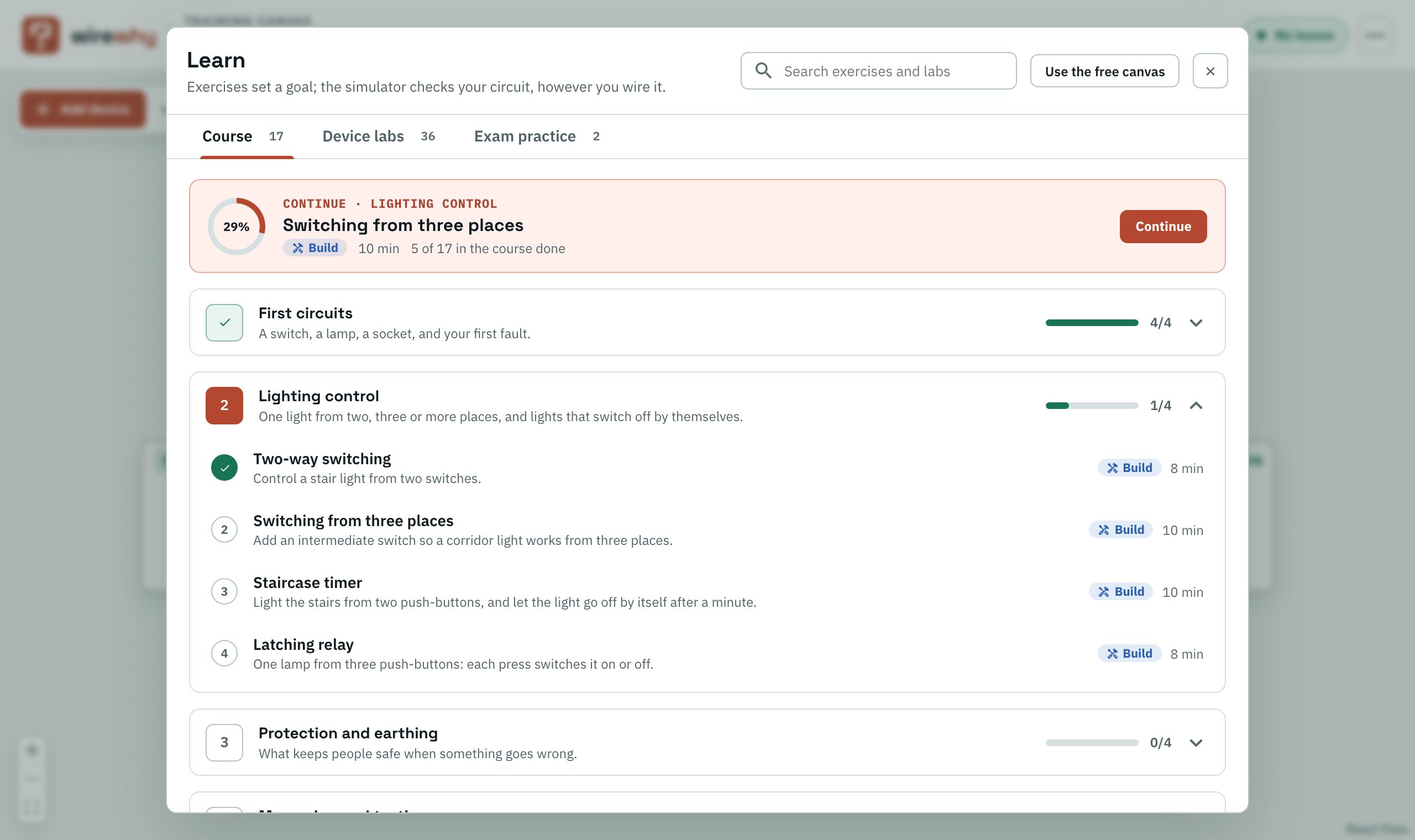
From your first lamp to two-way lighting, protection and earthing, boards, motor control, and fault finding, in short units.
A lab for every device
Short labs that show what each device does, from the fuse and the RCD to the contactor and the staircase timer.
Help when you are stuck
Hints first, then a guide that rings the next terminal to wire, and the answer when you want to compare.
Find the fault, as on a real job
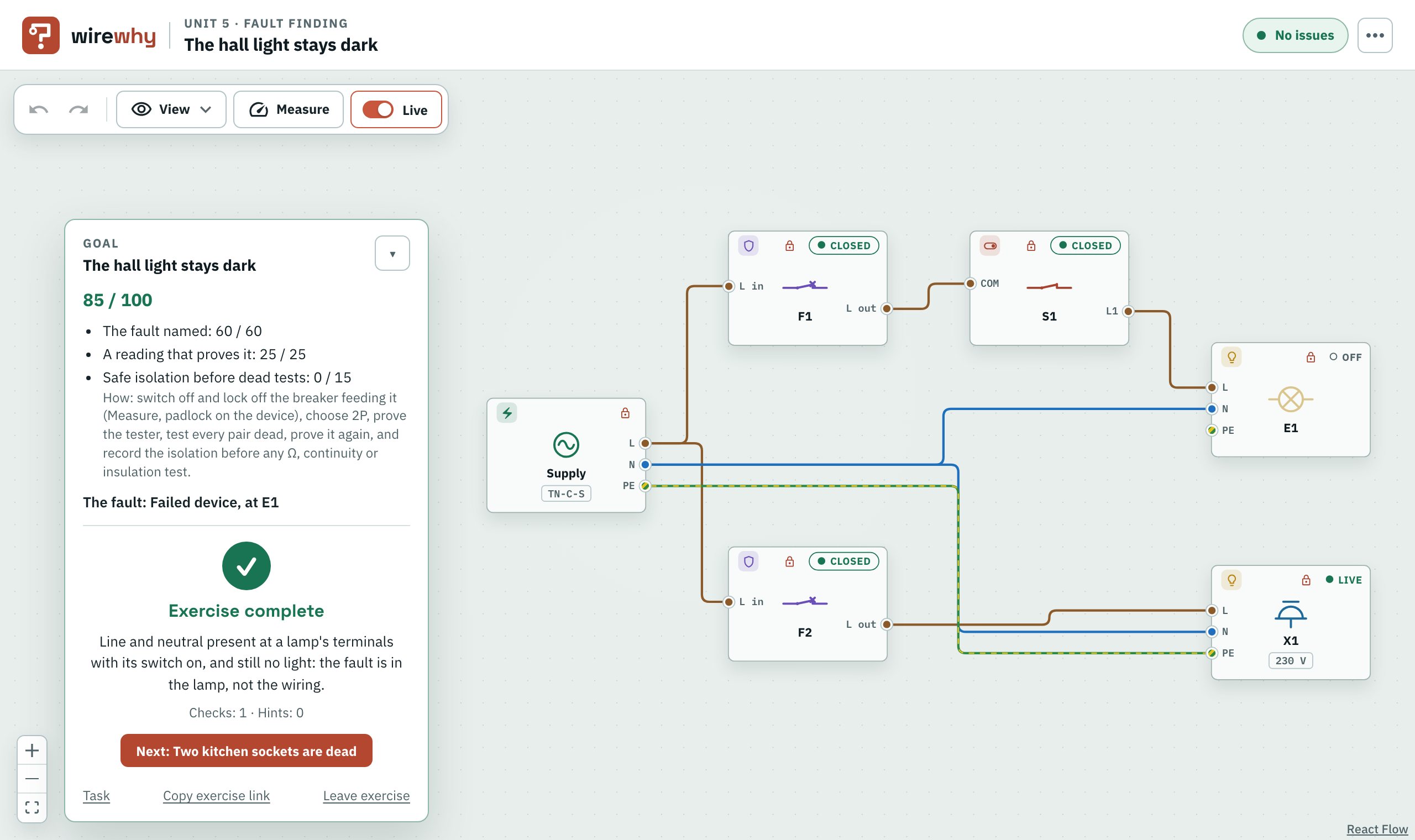
A circuit that should work but does not. Nothing tells you where the fault is: you switch, measure, and name what is wrong, and only then see the fault.
Fault boards from real jobs
A dark hall light, dead kitchen sockets, an RCD that will not stay on, a motor that hums on two phases: each with a story and a fault behind it.
Endless practice
A new fault every time, drawn on real circuits: failed devices, open and poor contacts, earth faults, and shorts.
Scored like an assessment
60 points for the fault, 25 for a recorded reading that proves it, 15 for isolating safely before the dead tests. One device away counts as close.
Exercises that check themselves
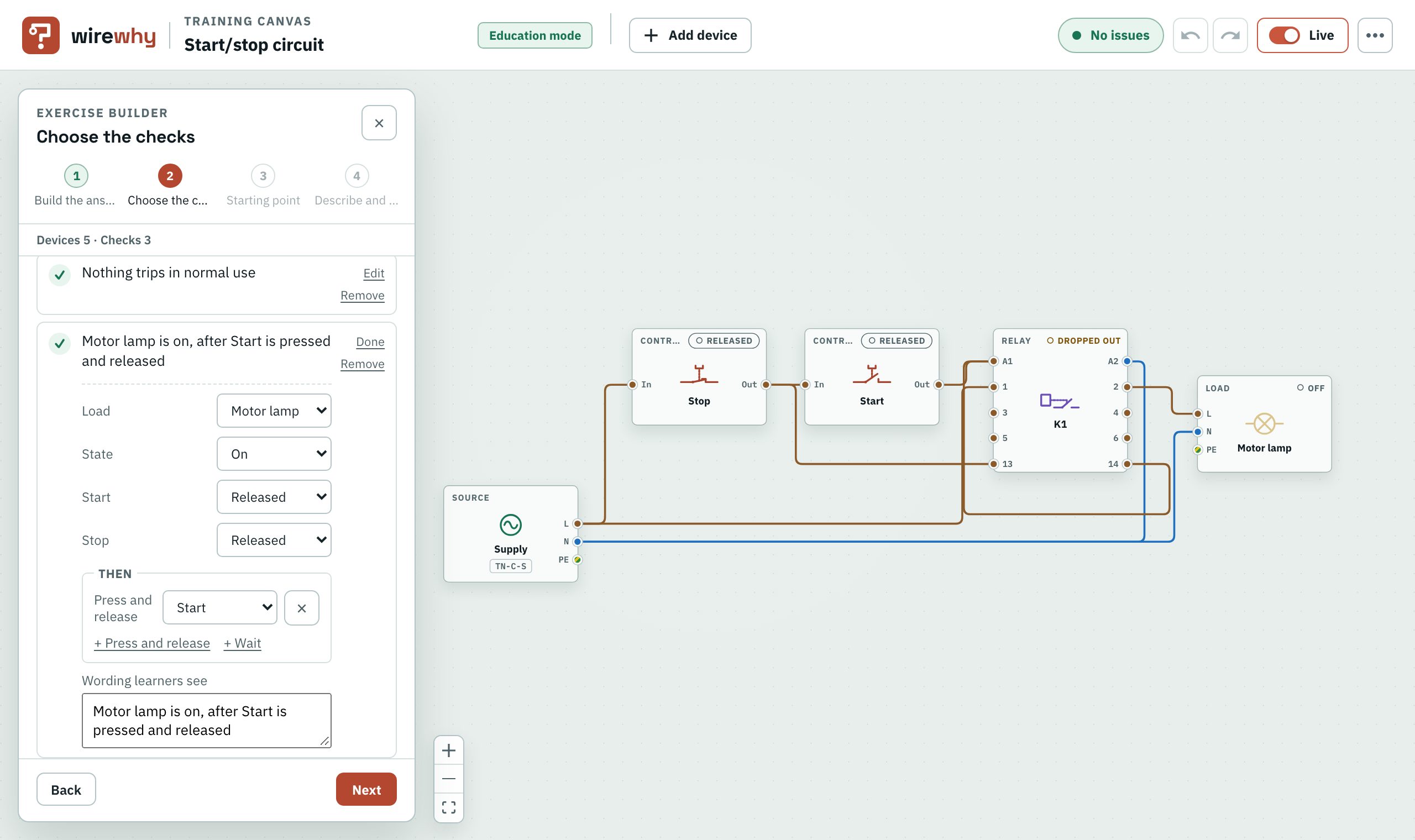
Wire the answer, pick the checks ("the lamp is on when Switch is closed", "only the RCD trips"), choose the starting point, and publish. Learners get instant, fair feedback; any wiring that passes every check counts.
From a lamp switch to motor control
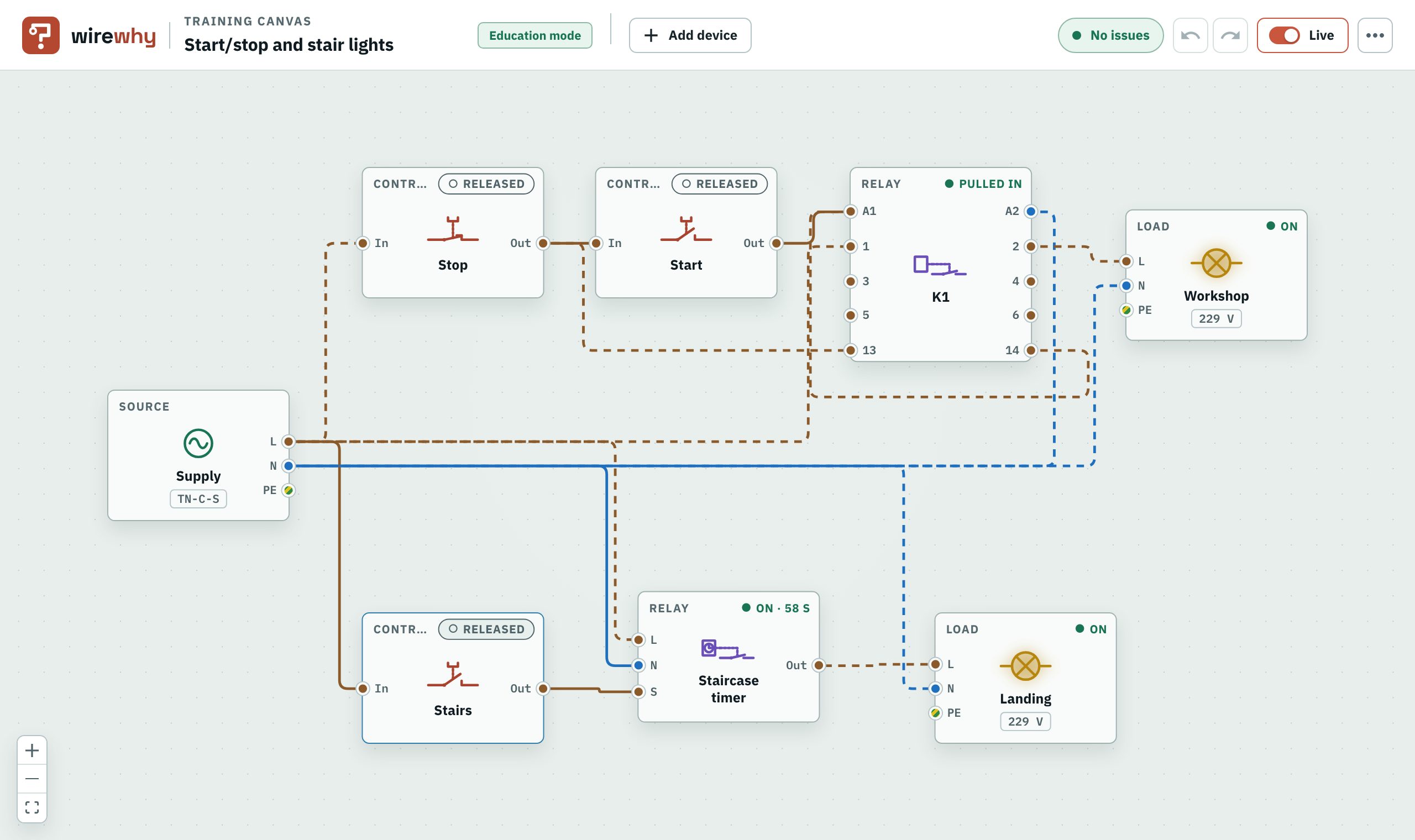
Start and stop buttons with a contactor that holds itself in, star-delta starters with their timer, time relays, impulse relays, and staircase timers that count down on the canvas; a motor protection breaker and a phase monitoring relay. Supplies in TN-C-S, TN-S, and TT; one-way, two-way, and intermediate switches; sockets, heaters, and motors.
See it as it looks for real
Switch to the realistic view and every device appears as its front view: breakers and RCDs on the DIN rail, N and PE bars below, switches, lamps, and sockets as you would fit them, with wires ending on the screws. The simulation and the checks work the same in both views.
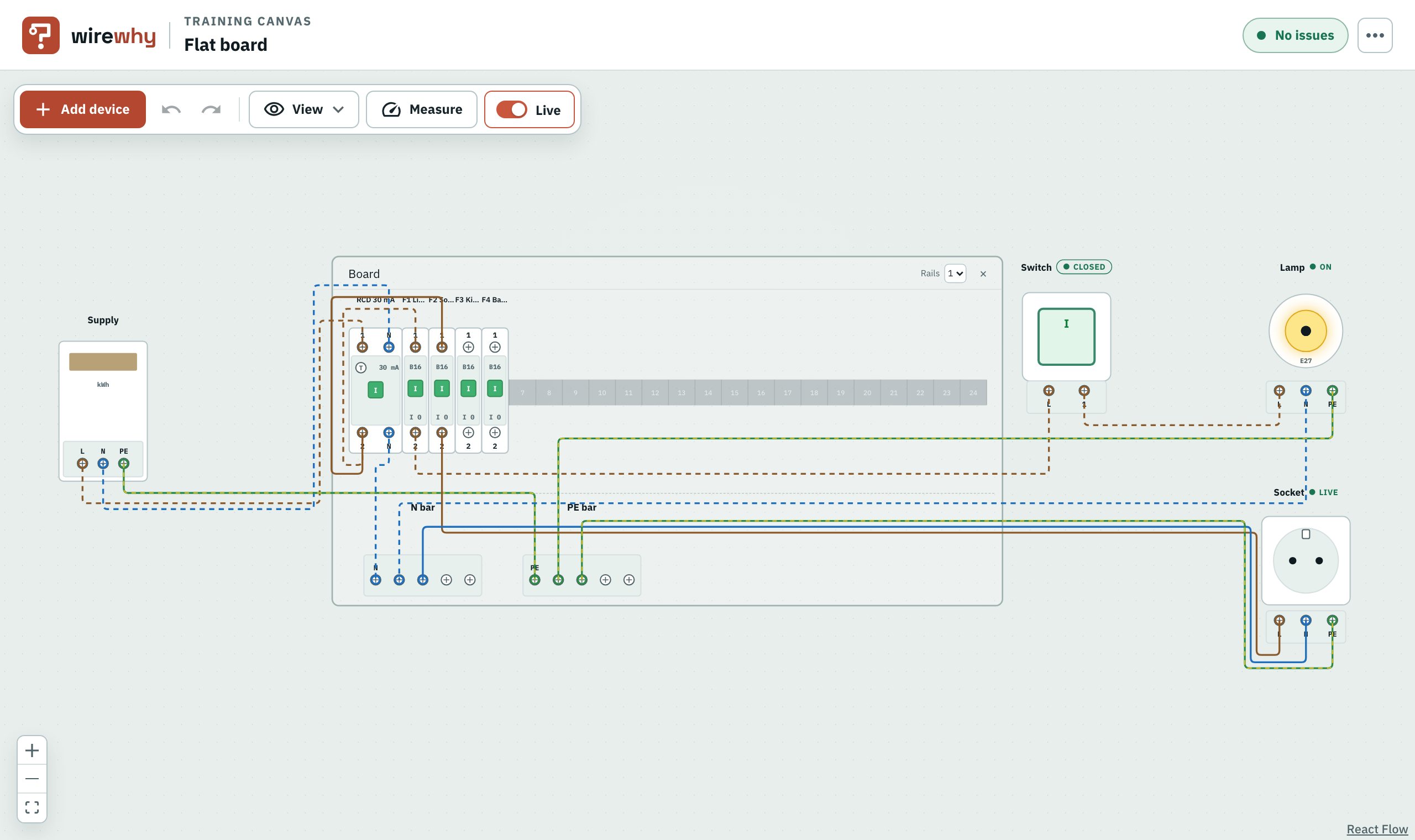
Draw the board you built
One board on the canvas gives you five sheets: a wiring diagram, the single-line diagram, the board layout, a terminal plan, and labels for every breaker. They are drawn from the circuit as it is wired, so a neutral on the wrong bar is red on paper too.
Before you wire it
Sketch a small board, check what trips and what stays live, then print the wiring diagram and the terminal plan for the job.
Earthing as it is
The PEN and where it splits in TN-C-S, PE from the network in TN-S, the earth electrode in TT; surge protectors and RCD groups where they sit.
For the apprentice
Hand over the drawings with the board: which screw takes which wire, rail by rail.
Drawings for training and planning, not certified design documents.
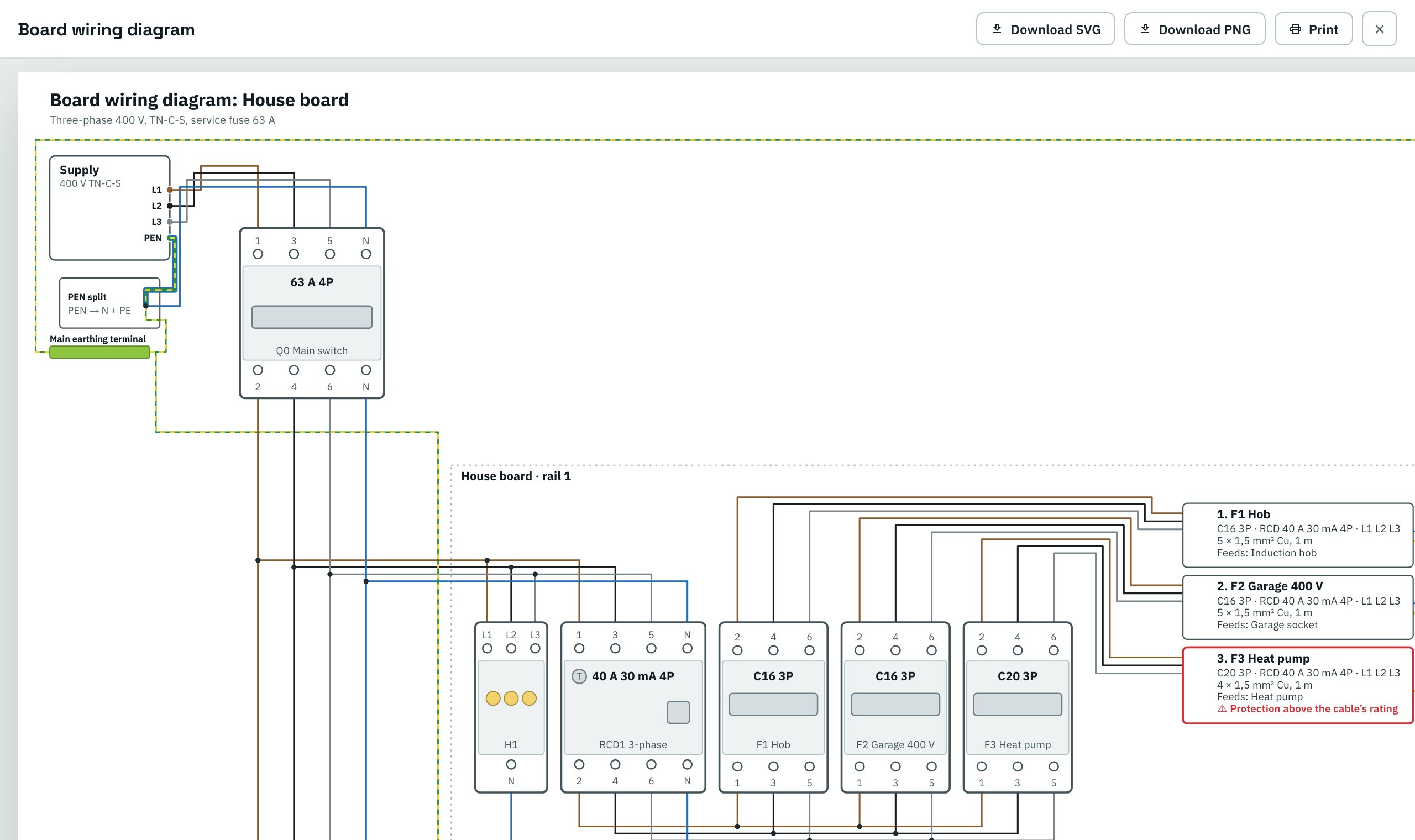
The devices of a real installation, drawn as in your textbook
- Supply
- Circuit breaker
- RCD
- Switches
- Push-buttons
- Contactors and timers
- Lamps and heaters
- Sockets
- Motors